
Reduced output may be caused by worn blades, irregular feeding, excessive feed size, unsuitable material, conveyor problems or material buildup in the cutting chamber. First check the feeding condition and blade wear, then inspect the transmission and discharge system. If the issue continues, send operating videos and equipment information to the support team for diagnosis.
Get a Free Quote →Replacement blades and commonly used mechanical or electrical parts can be supplied according to the machine model and configuration. We recommend confirming a spare-parts list when ordering, especially for projects where local access to compatible components is limited. Providing the machine model and serial information helps identify the correct replacement parts.
Get a Free Quote →The operator should stop feeding material and follow the machine’s prescribed overload-handling procedure. Depending on the control configuration, the machine may stop or reverse to help release the material. Operators should never enter the cutting chamber or remove trapped material before the equipment is completely isolated from power.
Get a Free Quote →Blade service life depends on material hardness, contamination, operating hours and feeding conditions. Processing clean plastic or light scrap creates different wear from processing thick metal or mixed waste containing hard foreign objects. Blades should be inspected regularly and rotated, repaired or replaced according to actual wear.
Get a Free Quote →Routine maintenance normally includes checking blade wear, bolts, bearings, lubrication, gearbox condition, hydraulic oil and electrical connections. The cutting chamber should also be inspected for foreign objects and material buildup. Following the maintenance schedule helps reduce unplanned downtime.
Get a Free Quote →Operation guidance can cover machine startup and shutdown, material feeding, overload handling, routine inspection and basic maintenance. For a complete production line, training can also include the coordination of conveyors and separation equipment. The final training scope is confirmed according to the project configuration.
Get a Free Quote →Yes, installation guidance and commissioning support are available for our equipment and production lines. The support method depends on the machine configuration and project location. Installation requirements and service arrangements should be confirmed before shipment.
Get a Free Quote →The installation site should have sufficient floor space, suitable foundation strength, a compatible power supply and safe access for lifting and maintenance. Complete production lines may also require dust extraction, drainage or compressed air. Detailed site requirements depend on the final equipment configuration.
Get a Free Quote →Please confirm the local voltage, frequency and phase, such as 380V/50Hz/3-phase or 440V/60Hz/3-phase. Electrical components and motors need to match the destination country’s power conditions. The power supply information should be confirmed before the machine enters production.
Get a Free Quote →Yes. Please provide the workshop dimensions, entrance size, ceiling height, foundation conditions and preferred material flow direction. Our engineers can adjust the equipment arrangement and conveyor layout according to the available installation area.
Get a Free Quote →Common auxiliary equipment includes feeding and discharge conveyors, magnetic separators, trommel screens, wind separators, eddy current separators and dust collectors. The required equipment depends on whether your goal is simple size reduction or the separation and recovery of different materials.
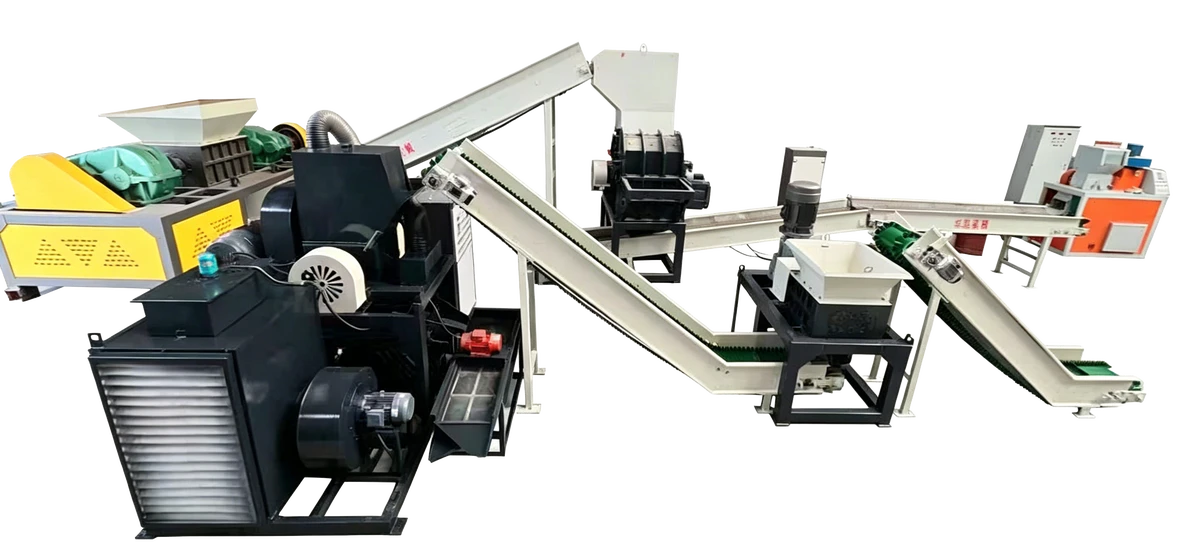
Get a Free Quote →Yes. In addition to standalone shredders and crushers, we can configure complete processing lines according to the material and recovery target. A typical line may include feeding conveyors, shredders, crushers, magnetic separators, screens, wind separators, eddy current separators and dust collection equipment.
Get a Free Quote →Even with the same machine, output can vary because materials have different density, hardness, dimensions and feeding consistency. Operator experience, conveyor speed, blade condition and discharge requirements also affect throughput. This is why machine selection should be based on actual material data rather than model size alone.
Get a Free Quote →Capacity is affected by the material type, bulk density, feed size, thickness, moisture, feeding method and required output size. The capacity shown in a specification sheet is normally a reference range rather than a fixed result for every material. Actual output should be evaluated using your specific operating conditions.
Get a Free Quote →Yes, output size can be adjusted within a practical range by changing the blade configuration, cutter width, screen opening or processing stages. The available adjustment method depends on whether you select a single-shaft shredder, twin-shaft shredder or crusher. Please tell us the required final size before production.
Get a Free Quote →This depends on the type and level of contamination. Oil, moisture, dust and hazardous residues may affect feeding, separation, safety and maintenance requirements. Please provide material details in advance so that suitable feeding, sealing, dust collection or pretreatment measures can be considered.
Get a Free Quote →Yes, mixed materials can often be shredded first and separated afterward. Depending on the material composition, the production line can include conveyors, magnetic separators, trommel screens, wind separators or eddy current separators. The final configuration should be determined by the materials you want to recover.
Get a Free Quote →In many cases, one shredder can process several materials with similar physical characteristics. However, highly different materials may require changes to the blade design, screen, motor power or downstream separation equipment. If you plan to process mixed materials, please provide the approximate composition and proportion of each material.
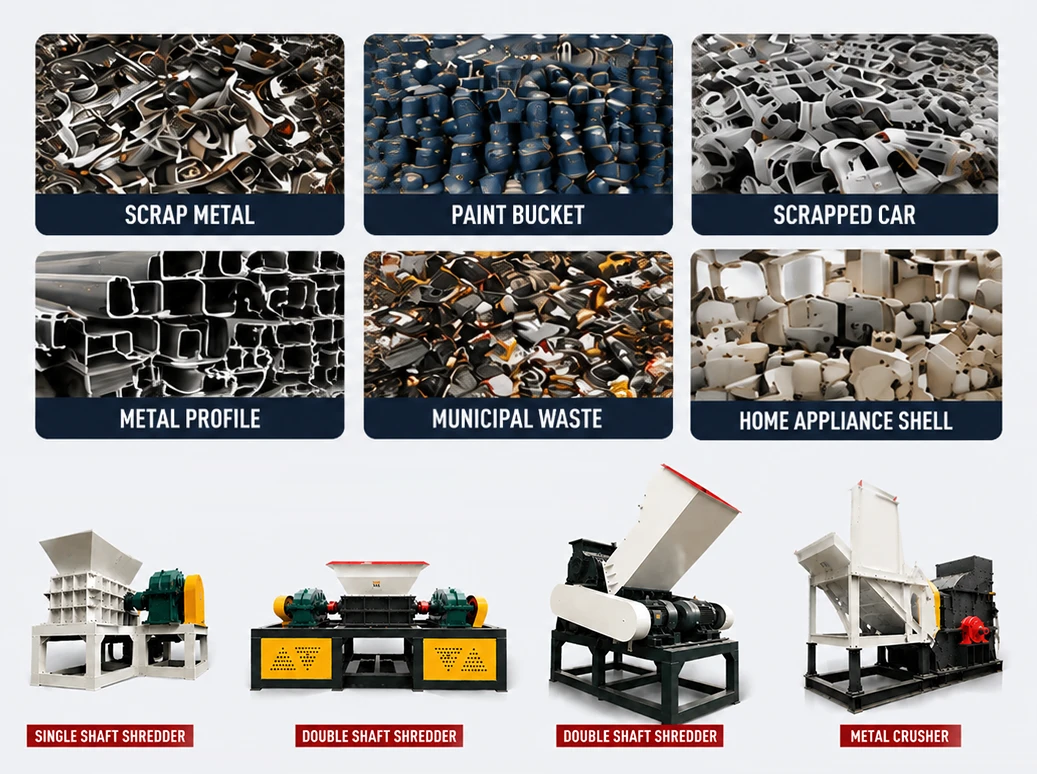
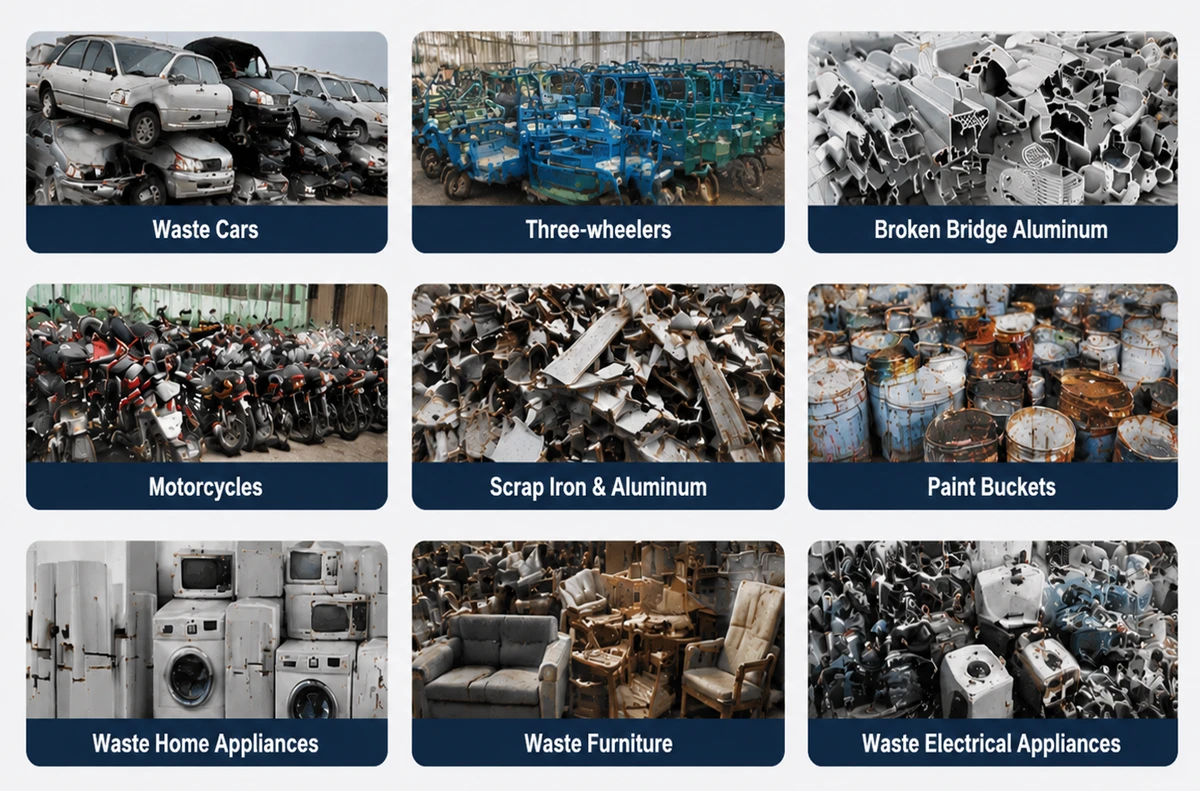
Get a Free Quote →Our equipment can be configured for scrap metal, aluminum, plastic, tires, wood, bulky waste, electronic waste, cardboard and other industrial materials. However, different materials require different blade structures, motor power and feeding systems. Please confirm the exact material with our engineers before selecting a model.
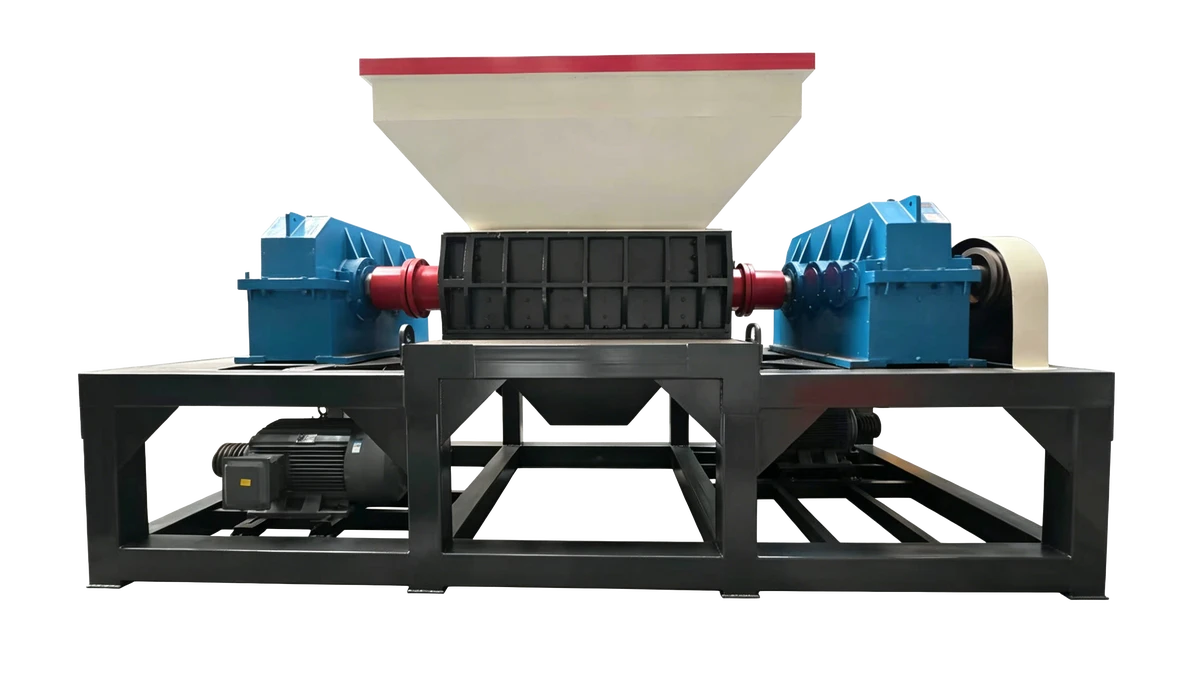
Get a Free Quote →A single-shaft shredder is commonly used when controlled output size is required through a screen. A twin-shaft shredder provides strong tearing force and is suitable for bulky, tough or mixed waste. A four-shaft shredder performs repeated cutting and may be selected when a smaller and more uniform discharge size is required.
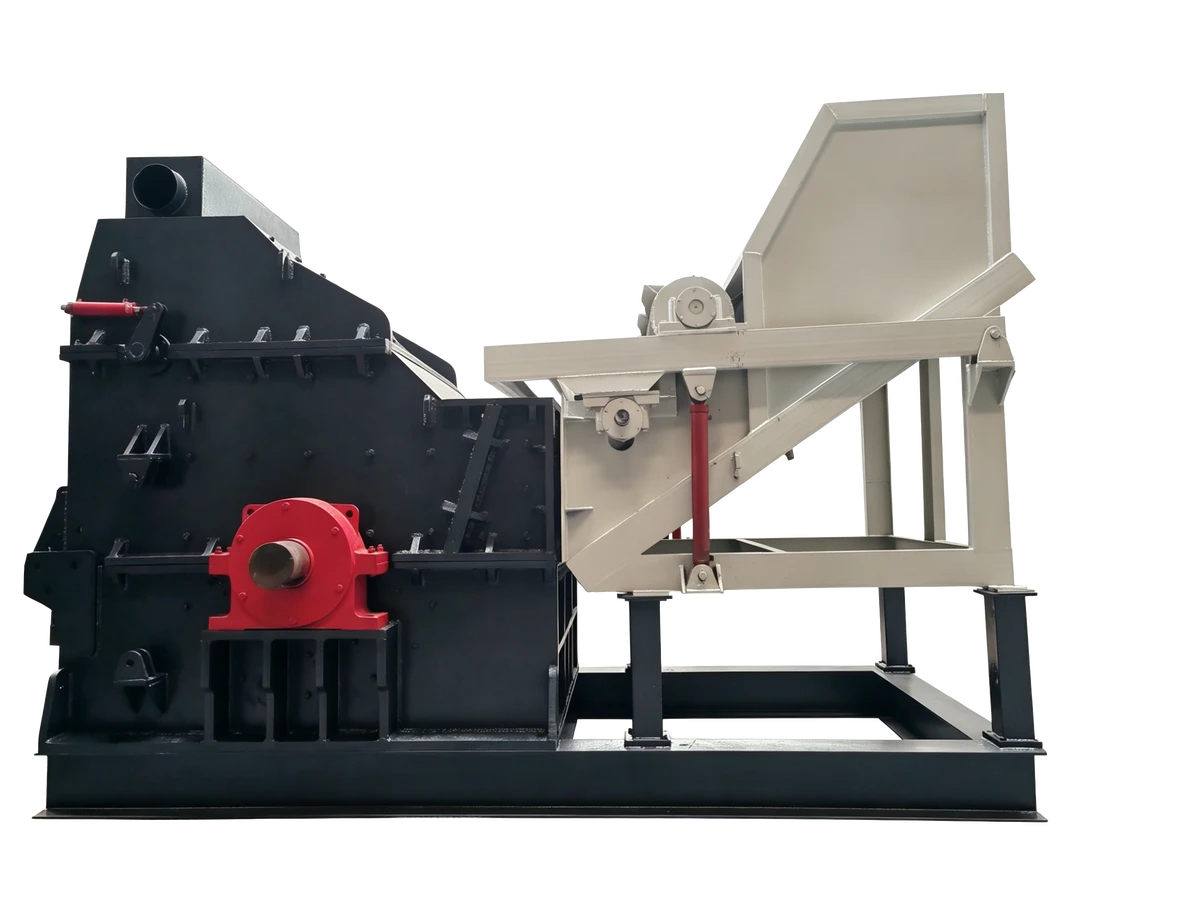
Get a Free Quote →A shredder is generally used for primary size reduction of large, bulky or irregular materials using low-speed, high-torque cutting. A metal crusher is more suitable when smaller and denser output is required after the material has been pre-sized. For some recycling projects, a shredder and crusher can be combined into one production line.
Get a Free Quote →Please provide the material name, photos or videos, approximate dimensions, wall thickness, bulk density and hourly processing requirement. You should also tell us the desired output size, available power supply and installation space. The more complete the information is, the more accurately we can select and configure the equipment.
Get a Free Quote →The right machine depends on your material type, size, thickness, hardness, hourly capacity and required output size. Please send us material photos or videos, the largest feed size, your target capacity and the final application of the shredded material. Our engineers will recommend a suitable machine model or complete processing line based on these details.
Get a Free Quote →We can ship orders starting from a single unit, regardless of your location. All products are available for OEM and ODM customization; you can also provide details such as your logo or manufacturer information for custom orders. All equipment comes with a product catalog, so please shop with confidence.
Get a Free Quote →Located in the Xingyang Industrial Park of Zhengzhou City, Henan Province, China, our company has specialized in the crushing and shredding industry for 15 years, with exports reaching markets across Southeast Asia. All our products have obtained certifications such as ISO 9001 (Quality Management System), CE, and UL, so you can purchase with confidence.
Get a Free Quote →You can reach our via email at [email protected] or through our website.
Get a Free Quote →We offer comprehensive international shipping solutions including FOB, CIF, EXW, and DDP terms. We partner with reliable logistics providers like DHL, FedEx, and Maersk for air and sea freight. We also can handle export documentation and customs clearance procedures.
Get a Free Quote →We accept secure international payments via T/T (wire transfer), L/C (Letter of Credit), D/P, and major credit cards through our secure payment gateway.
Get a Free Quote →Yes, we specialize in product customization and OEM/ODM services. We can customize packaging, branding, product specifications, and even develop entirely new products based on your requirements. Our R&D team works closely with clients to ensure all customizations meet international quality standards and market requirements.
Get a Free Quote →Our company's products are widely used in the solid waste recycling sector, rice straw and crop residue recycling, and other industries, providing high-quality supporting products for various industrial sectors.
Get a Free Quote →Our standard production lead time is 20-30 days after order confirmation and deposit receipt. For large volume or customized orders, lead time may extend to 30-45 days. Shipping times vary by destination: 3-5 days for express air freight, 20-30 days for standard sea freight. We could provide detailed production schedules with milestone updates throughout the process.
Get a Free Quote →Yes, we can provide most documentation, including certificates of analytical conformity, insurance, certificates of origin, and other required export documents.
Get a Free Quote →Yes, we can, but we prefer and always recommend using FCA, CFR/CIF, and DAP Incoterms for smoother, more cost-effective deliveries; we can also assist freight organizations.
Get a Free Quote →Our products are of high quality and comply with CE/RoHS international standards.
Get a Free Quote →Support customization, starting from 10 pieces. Our engineers will issue you free 3D rendering for confirmation before the production of big goods.If you already have CAD drawings on hand, send them to us and we can come up with a preliminary cost reduction estimate for you today.
Get a Free Quote →The processing tolerance of different materials is slightly different, if you are convenient to inform the specific application scenarios or the required materials, we can help you make a precise match.
Get a Free Quote →The equipment is usually shipped by sea, and the regular delivery time is 25 days. We have organized the time-consuming of each link of quality inspection, packaging and customs clearance into "2026 Standard Order Progress Gantt Chart", we can send you a copy for reference if needed.
Get a Free Quote →We have extensive experience in customs clearance in the African market. Can contact us how we helped him to avoid high tariffs.
Get a Free Quote →
Fast response · Professional answers · Solutions
Contact via WhatsApp
Fast response · Professional answers · Solutions
Contact via WhatsApp


 English
 繁体中文
繁体中文 Bahasa Melayu
 Japanese
 Filipino
 Bahasa Indonesia
 Afrikaans
 Español
 简体中文
简体中文 Burmese
 Thai
Thai Tiếng Việt